Every year, thousands of travellers from dozens of countries ask us the same set of questions about the Everest...
Two Kitchens on One Trail : Eating Your Way Through the Everest Region
August 19, 2026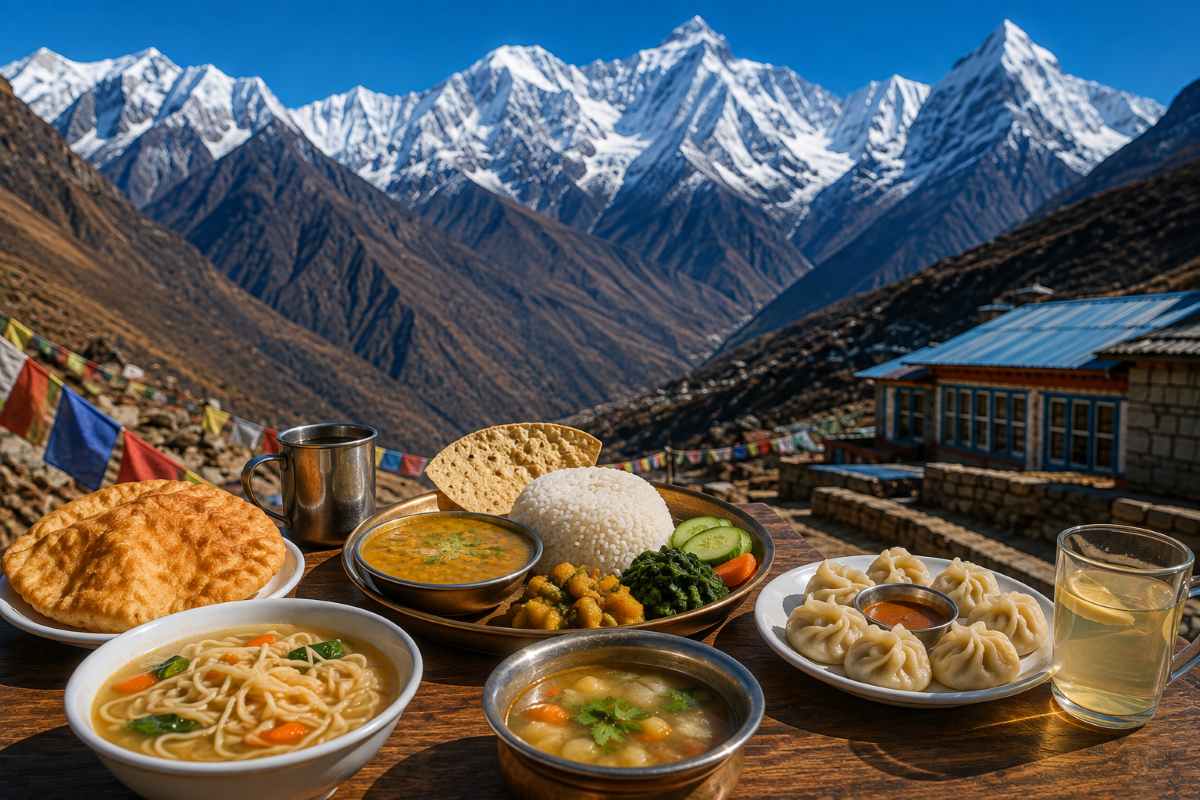
Somewhere on the way to Everest Base Camp, the smell of woodsmoke and simmering broth gives way, out of nowhere, to the smell of bread baking. For anyone experiencing Everest Base Camp trek food for the first time, it can be a surprising part of the journey. You brace yourself for the mountains, the swinging bridges over glacial rivers, the staircases cut into rock that never seem to end. Nobody warns you that you’ll be handed a cappuccino and a wedge of apple pie at 3,440 meters, less than an hour after finishing a bowl of yak-cheese momos.
The Khumbu Valley, the gateway to Everest, has turned into one of the stranger and more interesting food regions on earth. Not because anyone set out to invent something new, but because two very different food cultures collided here. Sherpa cooking, shaped over centuries by altitude, scarcity, and Tibetan Buddhist tradition, now shares kitchen space with a bakery scene built up over decades by European trekkers and mountaineers. Some evenings you’ll see both on the same menu, in the same lodge, an hour apart. This guide to food on the Everest Base Camp trek breaks down what to eat, where to eat it, and which teahouses along the trail are worth planning your day around.
Sherpa Cuisine: The Original EBC Trek Food
Long before anyone came here to trek, Sherpa families in the Khumbu were feeding themselves on food built for cold and thin air: dense, warming, and made to stretch. A lot of that cooking hasn’t changed much, and it’s still the most honest thing on offer along the trail.
Momos are about as close as this region gets to a national dish. They’re stuffed with potato, cabbage, cheese, or chicken and buffalo meat, folded by hand, and you’ll find them fried, steamed, or dropped into broth as jhol (or soup) momo. Almost every teahouse makes its own, and the sesame-tomato dip that comes with them can taste completely different from one kitchen to the next.
Soup is really where this cuisine shines. Thukpa, noodles in a broth thick with vegetables and sometimes yak meat, is the dish most trekkers end up ordering without even thinking about it, usually once the cold rolls in during the afternoon. Its cousin, thenduk, made with hand-torn flat noodles, tends to stay closer to home kitchens than tourist menus. Finding a bowl of it feels a bit like being let in on something.
Then there’s dal bhat: rice, lentil soup, curried vegetables, and pickle, topped up again and again without you having to ask. Calling it a dish undersells it a little. It’s more like the engine that keeps the whole trek running, and it’s where the old trekker joke comes from: “Dal Bhat power, 24 hour.”
Potatoes grow well at this altitude, so they turn up constantly. Rildok, mashed potato and cheese patties fried crisp, and riki kur, a savory potato pancake usually served at breakfast, don’t get talked about much, but both taste better than they have any right to after a long morning of climbing.
If you want something a bit sharper, gundruk soup, made from fermented leafy greens, has a tangy, sour edge that cuts through the richness of everything else on the table. No conversation about Sherpa food would be complete without butter tea, salty and thick with churned yak butter, usually served alongside tsampa, roasted barley flour that’s kept people going in these mountains for generations. Neither is an easy first sip, but both grow on you.
Evenings tend to wind down with chang, a mild, fermented millet or barley beer, or tongba: fermented millet in a wooden vessel, topped off with hot water and sipped slowly through a bamboo straw that someone keeps refilling as the night goes on.
Bakeries and Cafes Along the Khumbu Trail
What makes the Khumbu strange isn’t only its own food. It’s what grew up next to it. Decades of expeditions and trekking tourism left behind a real bakery and café culture, and it gets more elaborate the closer you get to Namche Bazaar.
Namche is where this second menu really kicks in. The bakeries here turn out cinnamon rolls, fresh loaves, and pastries every day, some of them still using stone ovens and recipes handed down from the early European bakers who settled in the valley decades ago. Apple pie, in particular, has practically become a rite of passage. You’ll find it not just in Namche but on up through Khumjung, Tengboche, and even Dingboche. The apples themselves aren’t always grown locally, but eating a warm slice with Everest in the window has become its own kind of tradition.
Pizza shows up too, even well above 3,000 meters in Dingboche and Lobuche. It’s wood-fired in style, if not always in substance, usually topped with local yak cheese and whatever vegetables made it up the trail that week. It won’t remind you of Naples, but given the altitude and everything it takes to get ingredients up there, it’s honestly kind of impressive that it works at all.
Coffee has followed the same path, and it’s kept up the whole way, though not at every single lodge. From Lukla down at the trailhead all the way up to Everest Base Camp itself, there’s usually at least one bakery, cafe, or teahouse in each village pulling proper cappuccinos and lattes from Nepali and imported beans, even if the place next door is still pouring instant sachets. It’s worth asking a local or your guide which spot in town has the real thing if a good cup matters to you. Breakfast menus blur the line between the two food worlds completely: pancakes, French toast, muesli with yak curd, and omelets sit right next to Tibetan bread and butter tea on nearly every teahouse menu between Phakding and Gorak Shep.
Yak cheese runs through both menus: on pizza, in sandwiches, or just eaten plain with crackers. Dense, tangy, and unmistakably of this place, it might be the one ingredient that actually ties the whole trail’s food together.
The Trail, Course by Course
| Village | Altitude | What to Order |
| Lukla / Phakding | 2,800m | First momos, dal bhat, fresh coffee (ask locally) |
| Namche Bazaar | 3,440m | Bakery pastries, pizza, espresso |
| Tengboche | 3,870m | Apple pie with a monastery backdrop |
| Dingboche | 4,410m | Thukpa, garlic soup (an altitude favorite) |
| Lobuche / Gorak Shep | 4,900m+ | Dal bhat, noodle soup, hot lemon-honey-ginger tea |
Where to Eat, Village by Village
Phakding (2,610m):
Most people’s first night on the trail, and a decent introduction to teahouse dining. Tribeni Lodge Restaurant and Bar sits right on the Dudh Koshi River and is known for yak steak made with vegetables from its own farm. Green Village Guest House & Restaurant and Trekker’s Lodge & Restaurant are both solid, family-run options with wood-stove dining rooms and dependable dal bhat.
Namche Bazaar (3,440m):
The bakery capital of the trail, and worth burning an acclimatization day to properly explore. Hermann Helmers, the valley’s original German-style bakery, is still the benchmark: chocolate carrot cake, real coffee, apple pie. Sherpa Barista Bakery & Coffee Shop and Everest Bakery and Restaurant both keep long hours and turn out good pizza alongside their pastry cases. For the view, try Stupa Cafe, right by Namche’s stupa, or HighCamp Cafe, which locals and trekkers alike rate as some of the best pizza in town.
Dingboche (4,410m):
The second acclimatization stop, and a real surprise for how good the coffee is this high up. Cafe4410 runs an actual espresso machine at 4,410 meters and even hosts an afternoon movie screening. Green Tara Lodge & Restaurant, one of the oldest lodges in the valley, is known for homemade sea buckthorn jam and warm, family-run hospitality. Chomolungma Hotel & Restaurant is a reliable dining-hall option near a well-known local bakery.
Best-Rated, By Dish
Looking past the village-by-village picks, reviewer consensus points to a few standouts worth chasing down by dish rather than by location.
Momos & Asian Comfort Food
Umami Taste Corner in Namche (4.9 stars, 64 reviews) gets praised for its ramen broth. One reviewer called it the best meal they had anywhere in Nepal. Sherpa Barista Bakery & Coffee Shop (4.9 stars, 1,513 reviews) backs up its reputation with sheer volume, holding a near-perfect rating across well over a thousand reviews.
Thukpa & Noodle Soup
Everest Steak & Wine House in Namche is singled out specifically for its thukpa, with one reviewer recommending it as the right call for anyone feeling cold or a little off in the stomach. Cafe4410’s Lukla location, sister to the well-known Dingboche café, gets similar praise for its noodle dishes.
Dal Bhat & Sherpa Staples
Green Tara Lodge & Restaurant in Dingboche (5.0 stars, 125 reviews) comes up again and again for authentic, family-run Sherpa hospitality. Tribeni Lodge Restaurant and Bar in Phakding (5.0 stars, 149 reviews) serves dal bhat made with vegetables grown on-site, which reviewers describe as fresh and satisfying.
Yak Steak & Western Mains
Everest Steak & Wine House (4.8 stars, 101 reviews), which bills itself as the world’s highest steak house, is the clear pick for a proper sit-down meal. Its yak steak and tenderloin come up over and over in reviews.
Bakery, Cake & Apple Pie
Hermann Helmers is still the one to beat, with its chocolate carrot cake mentioned again and again. Everest Bakery and Restaurant has the widest pastry case in town, and Namché Organics (5.0 stars, 55 reviews) stands out for vegan and gluten-free options under owner “Mojo.”
Coffee & Cafe Culture
Himalayan Sherpa Coffee, just outside Lukla at 2,800m, roasts its own beans on-site, and more than one reviewer rates it right up there with coffee capitals like Athens or Istanbul. Stupa Cafe in Namche has the best terrace view in town, and Cafe4410 in Dingboche runs a full espresso setup at 4,410 meters. From here on up, most villages have at least one bakery or cafe doing proper coffee, though it’s often tucked away rather than obvious from the trail, so a quick question to a local host is usually the fastest way to track one down.
Pizza
Three names come up over and over: HighCamp Cafe in Namche (4.9 stars, 703 reviews), widely cited as the best pizza in the valley; Cafe 4410 Lukla (4.7 stars, 79 reviews), which more than one reviewer called the best pizza they had in Nepal; and Everest Coffee Cafe in Lukla, whose smoked chicken pizza reviewers rank right up there with Namche’s best.
Why It’s Worth Paying Attention To
It would be easy to treat food on the EBC trek as fuel and nothing else, calories to burn before the next pass. But that contrast is part of what makes the region stick with you. One night it’s tongba by candlelight and a bowl of hand-pulled noodle soup; two days later it’s a cappuccino and a slice of apple pie with Everest sitting in the window. Two food traditions, decades apart in where they came from, sharing the same narrow trail through the Khumbu.
If you’re planning the trek, the advice is simple: don’t just pack snacks. Eat what’s put in front of you, village by village. On this trail, the food tells you almost as much as the scenery does.
FAQs
What food is available on the Everest Base Camp trek?
Teahouses along the trail serve two menus side by side: Sherpa staples like dal bhat, thukpa, and momos, and Western-style comfort food such as pizza, pancakes, and bakery pastries. Almost every lodge from Lukla to Gorak Shep offers both.
Is the food safe to eat on the EBC trek?
Cooked, hot food is generally safe throughout the Khumbu. Dal bhat, soups, and momos are cooked fresh to order, which lowers the risk compared to raw vegetables or untreated water. Most trekkers stick to hot meals and boiled or filtered water for that reason.
Where can you get apple pie near Everest Base Camp?
Apple pie is sold at bakeries from Namche Bazaar up through Khumjung, Tengboche, and Dingboche. Hermann Helmers in Namche is generally considered the benchmark, but nearly every village bakery on the route has its own version.
Do teahouses on the Everest Base Camp trek serve coffee?
Yes, though it’s usually at a specific bakery, cafe, or restaurant rather than every single teahouse in a village. Fresh coffee can be found from Lukla all the way up to Everest Base Camp, with Namche Bazaar and Dingboche home to full espresso setups. In smaller or higher villages, not every lodge will have it, so if a proper cup matters to you, ask your guide or a local host which spot in town serves the real thing.
What is dal bhat and why do trekkers eat so much of it?
Dal bhat is a plate of rice, lentil soup, curried vegetables, and pickle, usually refilled for free. It’s the most filling, most affordable option on the trail, which is why it doubles as the trek’s unofficial fuel source.
Related Blogs
August 31, 2026
Nepal Flash Flood 2026: What Happened in Rasuwa and What Travelers Need to Know
Nepal is once again facing a difficult moment after a devastating flash flood struck the Rasuwa District and Bhote...
August 24, 2026
From Holiday to Himalayan Experience: The Best of Nepal for the Modern Traveller
There are countries you visit, and there are countries that stay with you. Nepal belongs firmly in the second...
Ready to Explore the Himalayas?
Join us for professionally guided trekking, mountaineering expeditions, and peak climbing experiences across Nepal’s most iconic landscapes.
Join our newsletter & stay updated.
Error: Contact form not found.
We're associated with