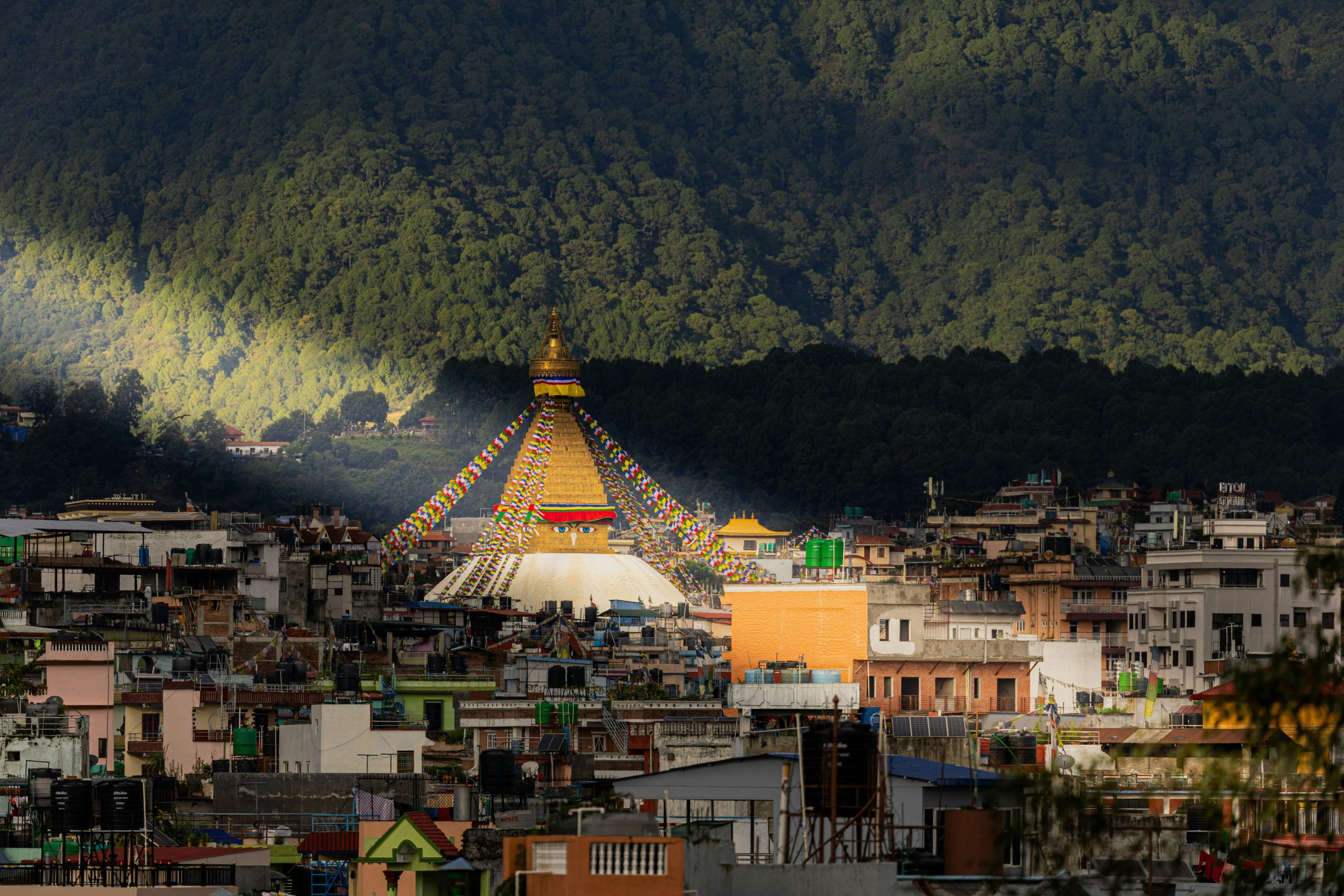
Discover the history, culture, spirituality, and architectural beauty of Nepal with our 1 Day Kathmandu City...
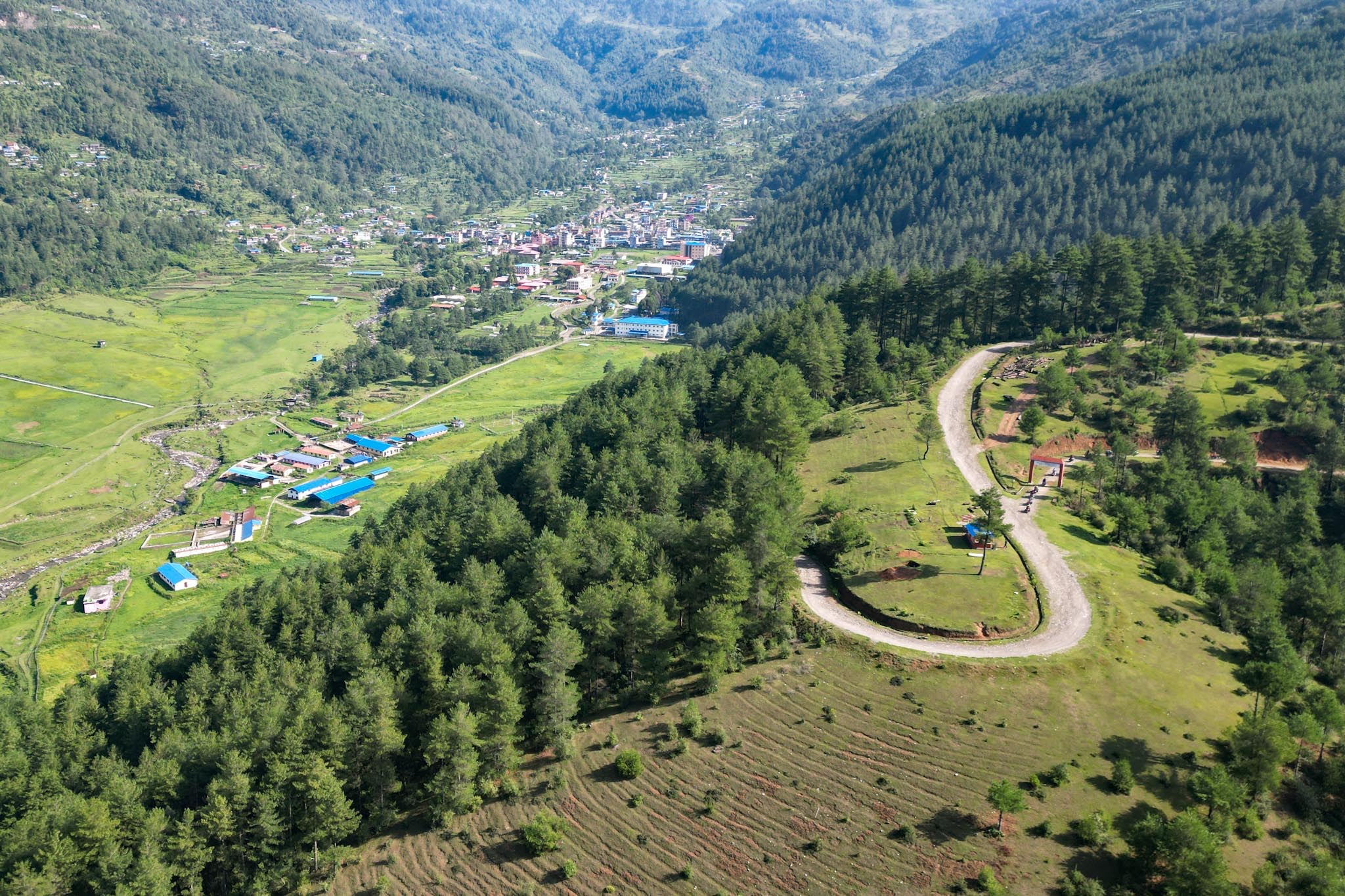
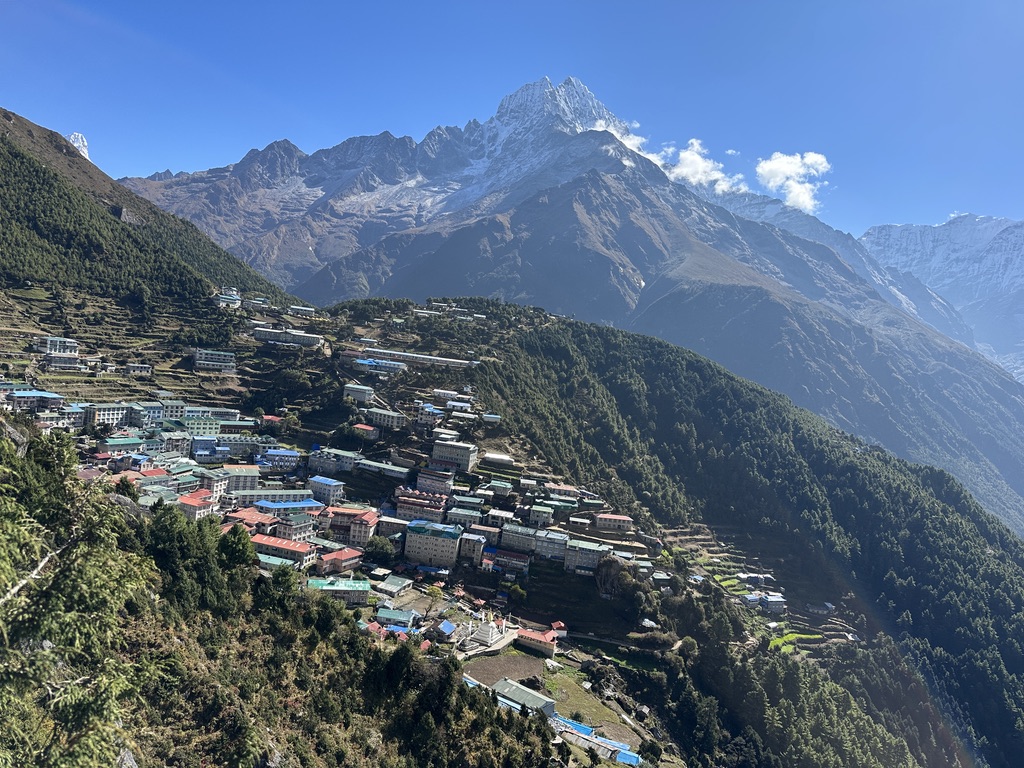
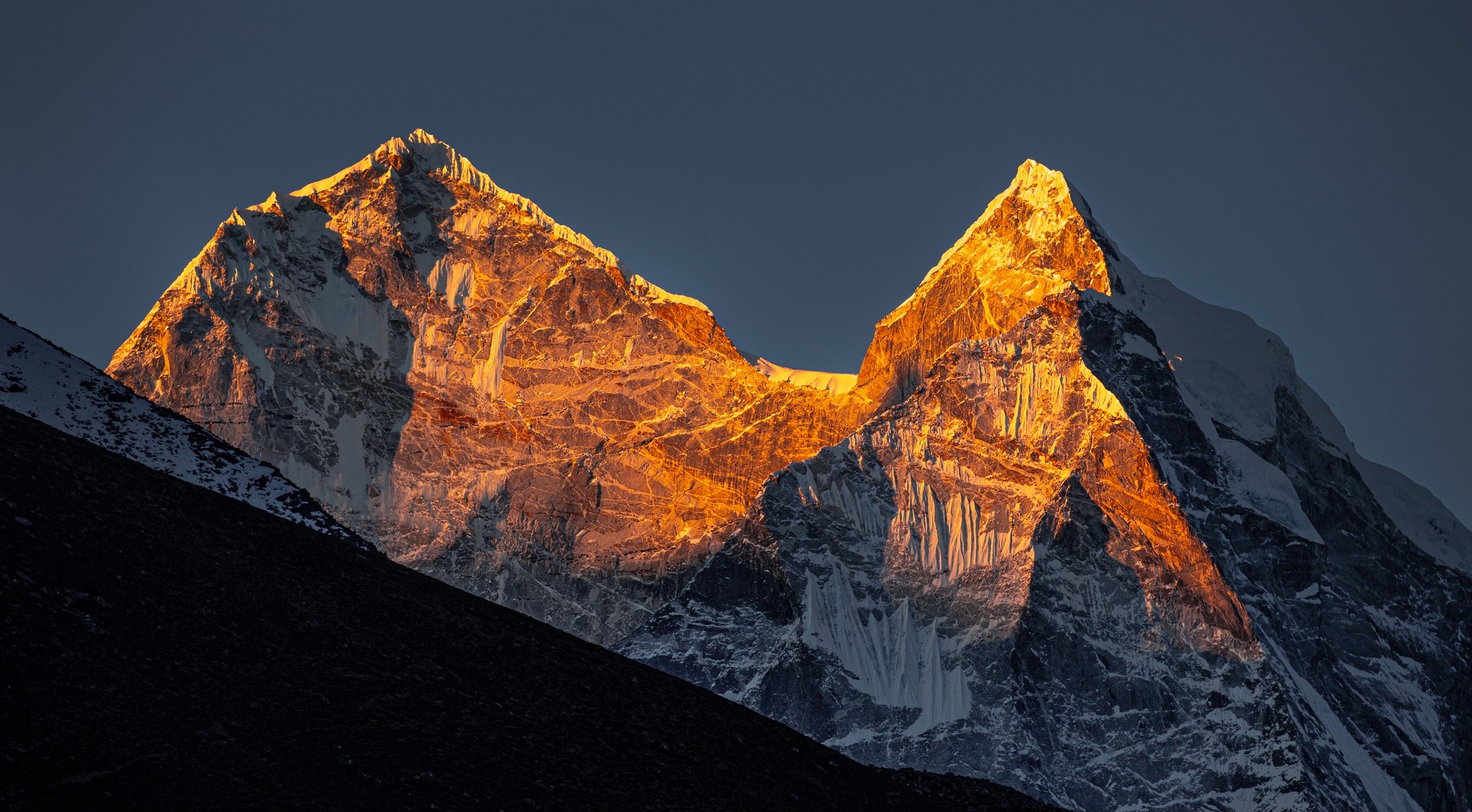
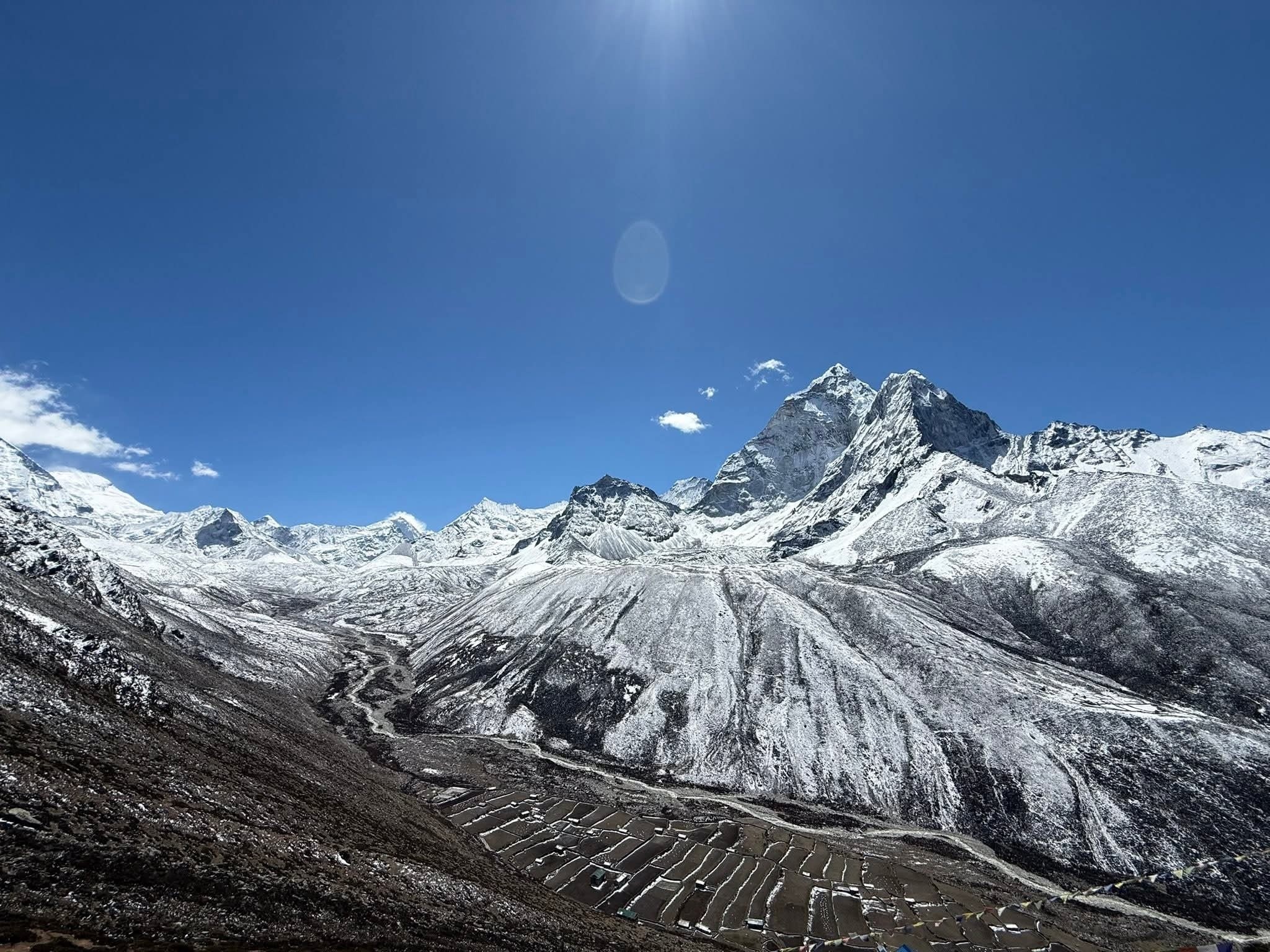
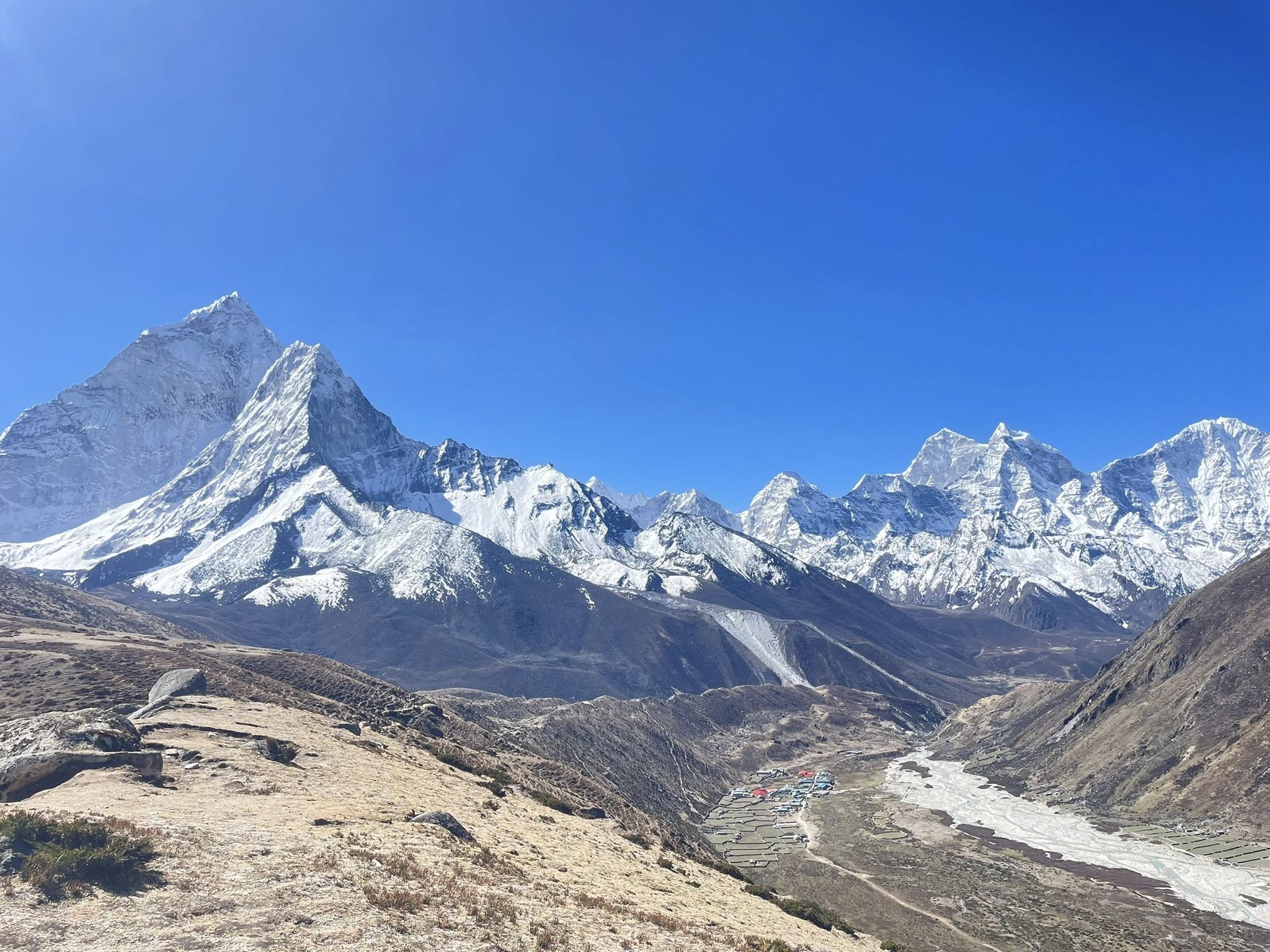
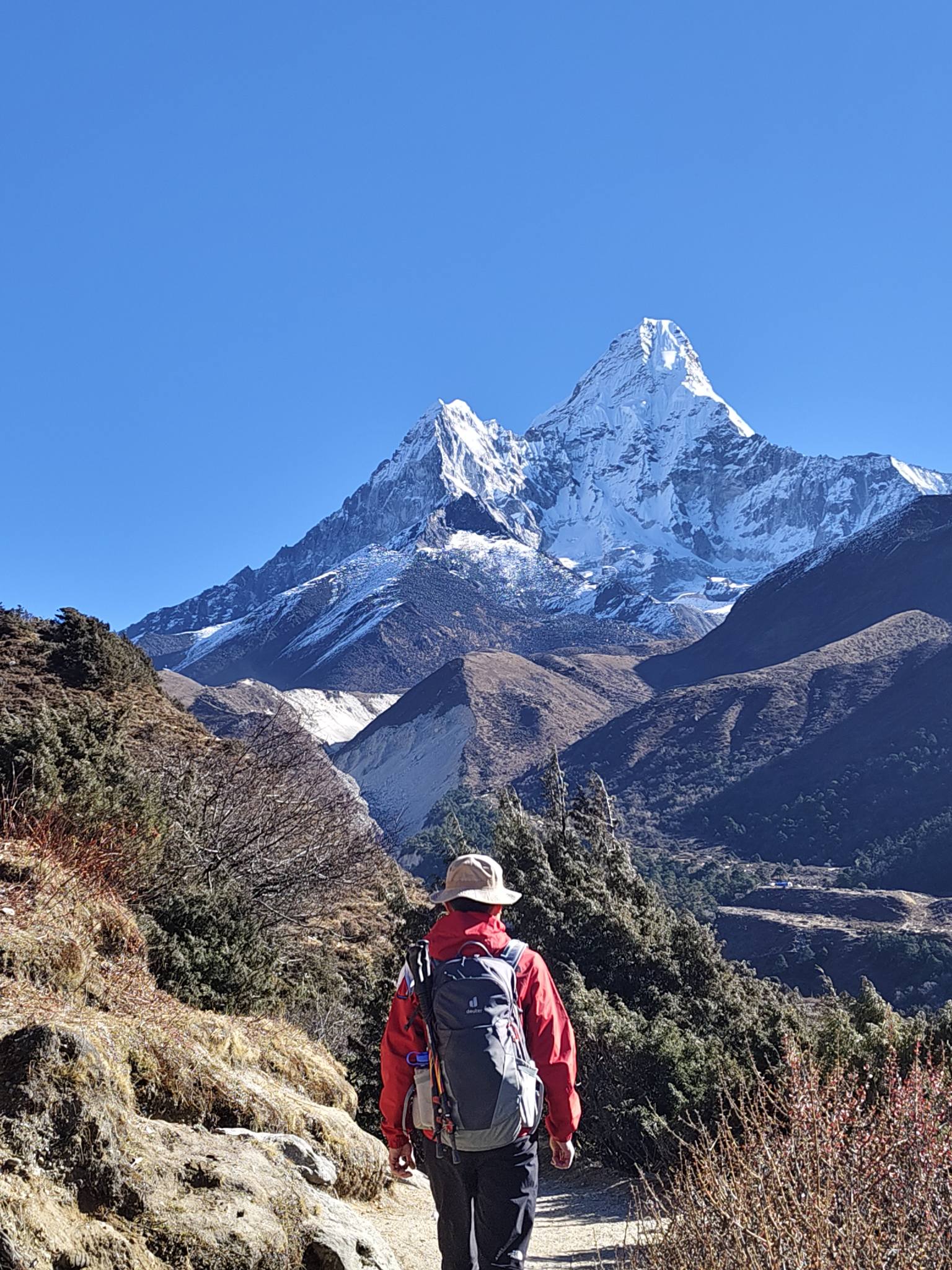
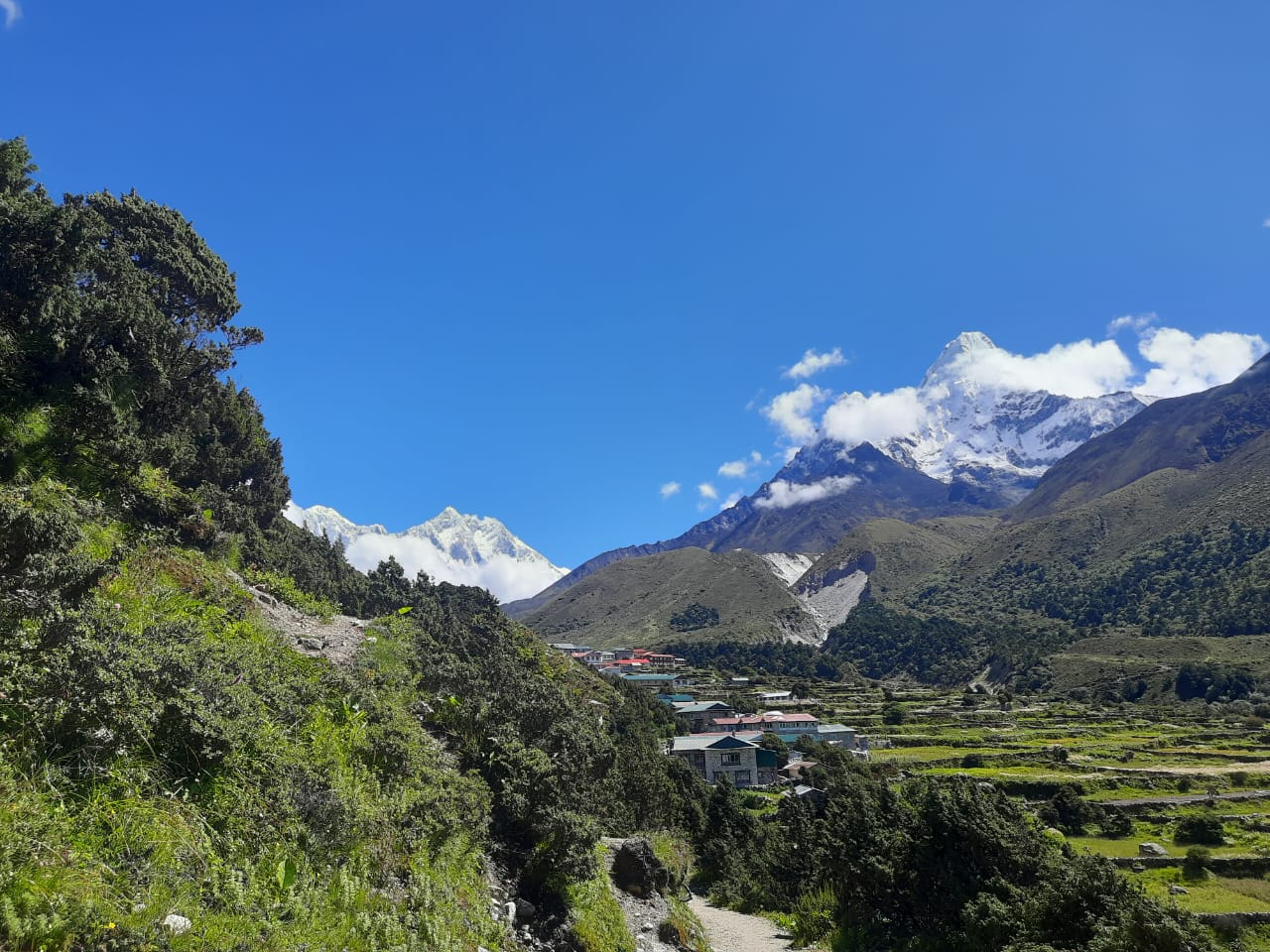
The Everest Heritage Trail Trek (Jiri route) to Everest is the historic and original approach to the Everest region, long before the Lukla airport was built. This legendary trail offers a deeper and more immersive Himalayan experience, following the footsteps of early explorers like Sir Edmund Hillary and Tenzing Norgay Sherpa.
Starting from the peaceful hill town of Jiri, the trek gradually leads through lush green hills, terraced farmlands, river valleys, and traditional villages before connecting to the main Everest Base Camp route in the Khumbu region. This slow and steady ascent allows excellent natural acclimatization and a richer cultural journey compared to the standard Lukla route.
Throughout the trek, travelers experience authentic Nepalese and Sherpa lifestyles, passing through villages such as Bhandar, Sete, Junbesi, and Namche Bazaar. The trail offers a perfect blend of nature, culture, and adventure, with ever-changing landscapes from subtropical forests to high alpine terrain.
As the journey continues, trekkers enter the heart of the Everest region, reaching iconic landmarks such as Tengboche Monastery, Dingboche, Lobuche, and finally Everest Base Camp (5,364 m / 17,598 ft). A highlight of the trek is the panoramic view from Kala Patthar, offering the closest and most dramatic perspective of Mt. Everest and surrounding peaks.
The Jiri to Everest Trek is ideal for experienced trekkers who seek a longer, quieter, and more culturally rich Himalayan adventure. It is not just a trek to Everest Base Camp, but a complete journey through Nepal’s heartland, history, and mountain heritage.
This classic route remains one of the most rewarding trekking experiences in Nepal for those who value authenticity, endurance, and deep cultural connection over convenience.
Trip Information

Duration
21 Days

Arrival
Kathmandu

Start/end point
Jiri

Difficulty Level
Normal

Max-Altitude
16,961feet/5,545

Group Size
2-15 pax

Highest location
Kalapathar

Fitness
Included Moderate Fitness Level is Required
Outline Itinerary
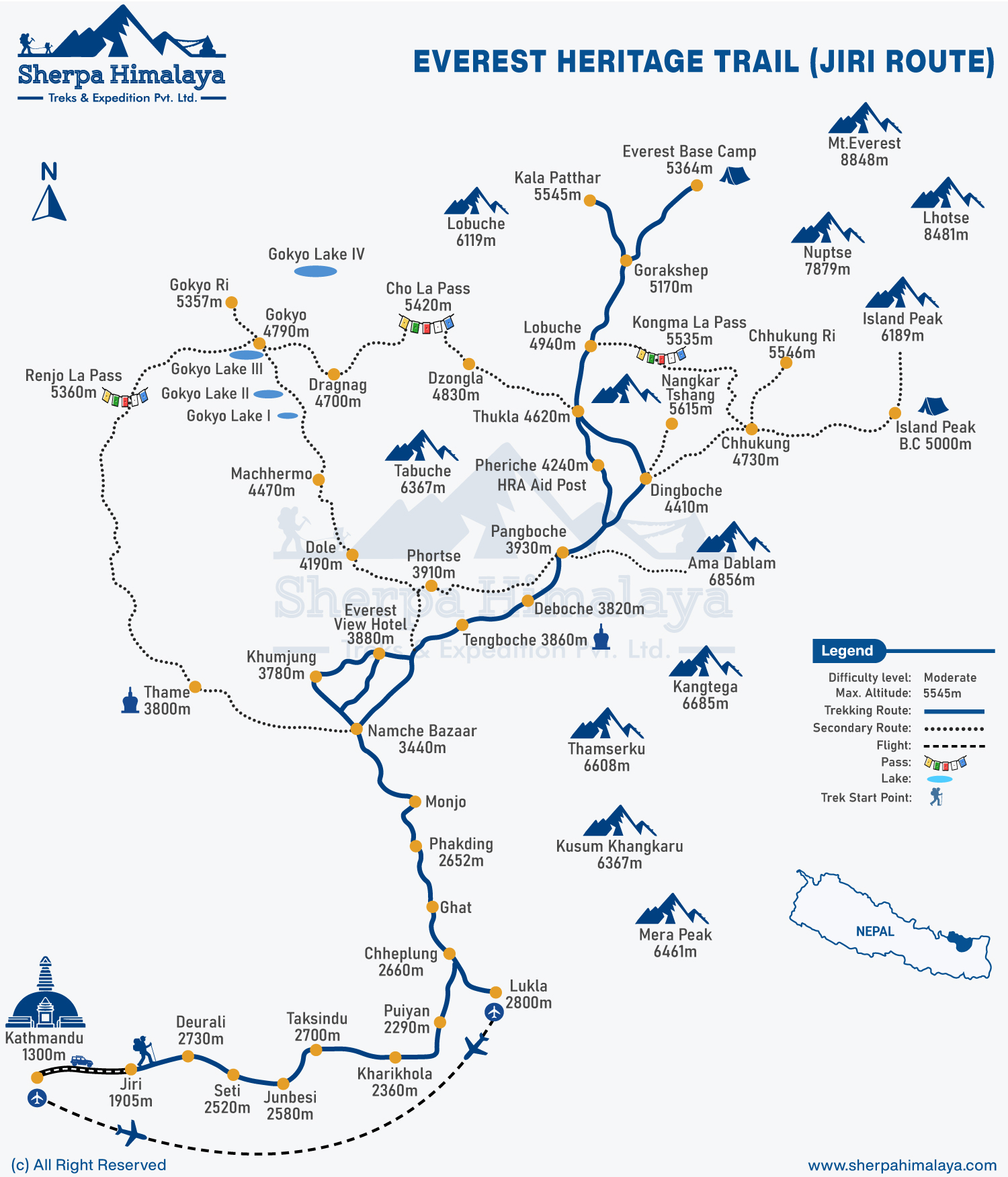
- Day 01 : Arrival day in Kathmandu (1300m)
- Day 02 : Drive from Kathmandu to Jiri (1,905 m/6,250 ft)
- Day 03 : Jiri to Deurali (2730m/8956 feet), 5-6 hours
- Day 04 : Deurali to Sete (2520m/8267 feet): 6/7 hours
- Day 05 : Sete to Junbesi (2580 m/8464 feet): 6/7 hours
- Day 06 : Junbesi trek to Taksindu (2700m/8858 feet), 6 hours
- Day 07 : Taksindu to Kharikhola bazar(2360 m/7,740 feet), 5/6 hour
- Day 08 : Kharikhola to Puiyan (2290m/7282feet), 5/6 hours
- Day 09 : Puiyan to Phakding (2,652m/8,700feet), 4/5 hours
- Day 10 : Phakding - Namche Bazaar (3440 m/11,280 feet), 5/6 hours
- Day 11 : Acclimatization Day - Namche Bazaar (3,440m/11,284feet
- Day 12 : Namche Bazzar to Debuche (3,870m/12,694feet), 5/6 hours
- Day 13 : Debuche to Dingboche (4,360 m/14,300 feet), 5/6 hours
- Day 14 : Trek from Dingboche (4,410 m / 14,468 ft) to Lobuche (4,940 m / 16,207 ft) (4-5 hours)
- Day 15 : Lobuche - Gorak Shep [5170 m/16,961feet] - Everest Base Camp [5364 m/17,594 feet], 7 - 8 hours
- Day 16 : Trek from Gorakshep to Kala Patthar and to Pheriche [4280 m/14,070 feet], 8 - 9 hours
- Day 17 : Trek from Periche to Namche Bazaar (3,440 m/11,280 feet), 6-8 hours
- Day 18 : Trek from Namche to Lukla 7-8 hours
- Day 19 : Lukla – Kathmandu, (2,800m/9,186feet)
- Day 20 : Free Day in Kathmandu
- Day 21 : Final Departure
Itinerary
-
Day 01: Arrival day in Kathmandu (1300m)
On this day you will be landed at the Capital City of Nepal-Kathmandu (1300m/4265 ft). It is the only International Airport of Nepal. You will be received by Sherpa Himalaya Representative.
Then with a brief introduction you will be welcomed by flower Garland. You will be Taken to your Hotel where you can rest and freshen up to keep away Jet Lag. You will get a nearby location map from hotel reception and you can explore around.
Overnight at KTM Hotel
- Day 02: Drive from Kathmandu to Jiri (1,905 m/6,250 ft)
Overnight at Jiri
- Day 03: Jiri to Deurali (2730m/8956 feet), 5-6 hours
The trek from Jiri (1,905 m / 6,250 ft) to Deurali takes approximately 5–6 hours and is the beginning of the historic Jiri to Everest Base Camp route.
The trail starts with a gradual ascent through lush green hills, terraced farmlands, and traditional villages, offering an authentic glimpse of rural Nepalese life. Along the way, trekkers can enjoy peaceful surroundings, flowing streams, and distant views of rolling Himalayan foothills.
As you continue uphill, the landscape becomes more forested with rhododendron and pine trees, creating a refreshing and scenic trekking experience. Deurali is a quiet hillside stop, perfect for resting and acclimatizing before continuing deeper into the classic Everest trekking route.
Overnight at Deurali
- Day 04: Deurali to Sete (2520m/8267 feet): 6/7 hours
Today our overnight will be at Sete. This day we will have combination of uphill and downhill trek. In the beginning we will descend down through the forest and reach down to the river bank pass over some small human settlement villages; Dokharpa and Baranda. Then we will start climbing uphill with gentle slope in the beginning which will lead us to Likhu Khola Valley. Then similarly we will climb normal uphill and reach Kenja after 1-2 hour and to Sete after few hours. It will take 7-8 Hours total from Deurali to Sete
Overnight at Sete
- Day 05: Sete to Junbesi (2580 m/8464 feet): 6/7 hours
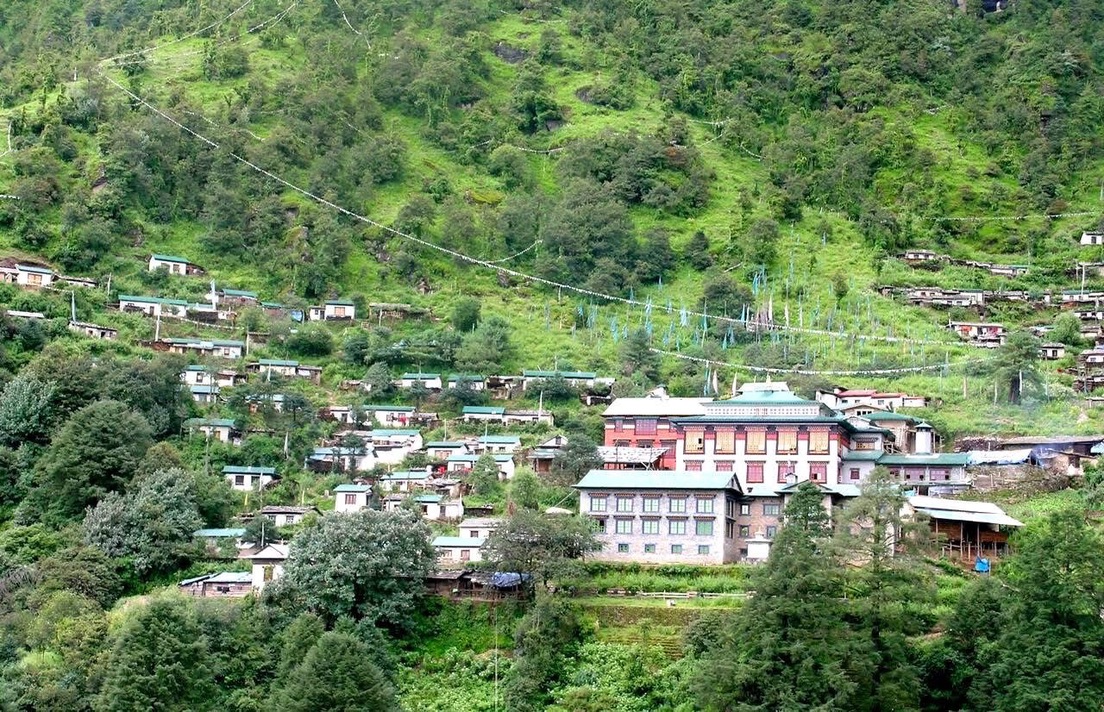
As after breakfast we will head towards Junbesi. Junbesi is a small town with some very old and famous monasteries. Today we will pass over a big hill known as Lamjura having an elevation of 3530m.
Descending down the pass to Tragdobuk and then nally to Junbesi.Overnight at Junbesi
- Day 06: Junbesi trek to Taksindu (2700m/8858 feet), 6 hours
Today after Breakfast we will climb though fine forest crossing down from Junbesi. As you climb higher you will have sight of Everest, Lhotse, Nupte, Makalu, Thamseruku, Mera Peak, and many other high mountains on a clear day. Further continuing the trail to Salung and then nally descending to Ringmo Khola. Then we will Ascend to Ringmo, crossing the Trakshindo La pass and reach Ringmo.
Overnight at Trashingdo
- Day 07: Taksindu to Kharikhola bazar(2360 m/7,740 feet), 5/6 hour
As usual after breakfast we will Trek down towards the Dudh Koshi River. Similarly, we will leave the river apart and climb uphill with Kharikhola destination of the day.
We will arrive Jubing on the trail and continuing straight to Churkha. With few hours of continuous trek we will reach Kharikhola in the evening.Overnight at Kharikhola
- Day 08: Kharikhola to Puiyan (2290m/7282feet), 5/6 hours
The trail from Khari Khola will pass through a forested stretch passing Kharte. From Kharte, an uphill climb will takes us to Khari La pass. Enjoying the magnicent views of
the Khari La pass of Gyachung Kang and Khumbila mountains among others, we will then descend down to Puiyan. Overnight at Puiyan.- Day 09: Puiyan to Phakding (2,652m/8,700feet), 4/5 hours
From Payain, our trail will climb toward Phakding. Initially, the trek moves up to Chhiplung. Then the trail will moves down to Phakding. Lunch will be on the way at suitable
place. We will also rest accordingly. Overnight stay at Phakding.- Day 10: Phakding - Namche Bazaar (3440 m/11,280 feet), 5/6 hours
The trek from Phakding (2,610 m / 8,562 ft) to Namche Bazaar (3,440 m / 11,286 ft) takes approximately 5–6 hours and is one of the most scenic and rewarding sections of the Everest Base Camp route.
The trail follows the Dudh Koshi River, crossing several suspension bridges, including the famous Hillary Suspension Bridge, before entering the gateway of Sagarmatha National Park. As you ascend steadily through pine forests and traditional Sherpa villages, the landscape becomes more dramatic with stunning views of snow-capped peaks like Thamserku and Kusum Kanguru.
The final ascent to Namche Bazaar is a uphill climb and it rewards trekkers with breathtaking Himalayan scenery and the vibrant atmosphere of the famous Sherpa town. Namche Bazaar is the main trading hub of the Khumbu region and a key acclimatization stop on the Everest Base Camp Trek
Overnight at Namche Bazaar
- Day 11: Acclimatization Day - Namche Bazaar (3,440m/11,284feet
Acclimatization Day in Namche Bazaar is an essential part of the Everest Base Camp Trek, designed to help your body adjust to higher altitude and reduce the risk of altitude sickness while staying at the same overnight location.
During this day, you will hike to the famous Everest View Hotel (3,880 m / 12,729 ft), one of the best viewpoints in the Everest region and part of the UNESCO-listed Sagarmatha National Park experience. The hike offers a gradual ascent that helps with proper acclimatization while rewarding you with stunning Himalayan scenery.
From the viewpoint, you can enjoy breathtaking panoramic views of iconic peaks such as Mt. Everest, Lhotse, Ama Dablam, Nuptse, Thamserku, Kangtega, and Kongde. After enjoying the views, you will descend back to Namche Bazaar for lunch and spend the rest of the day exploring the vibrant Sherpa town at your own pace.
Overnight at Namche Bazaar
- Day 12: Namche Bazzar to Debuche (3,870m/12,694feet), 5/6 hours
This day after having the breakfast we will head towards Debuche (3,820m). As we climb the Namche hill we will make a gentle slope walk for around a hour and then descend down to have the Lunch at Pungi Thanga which has an elevation of 3260m.
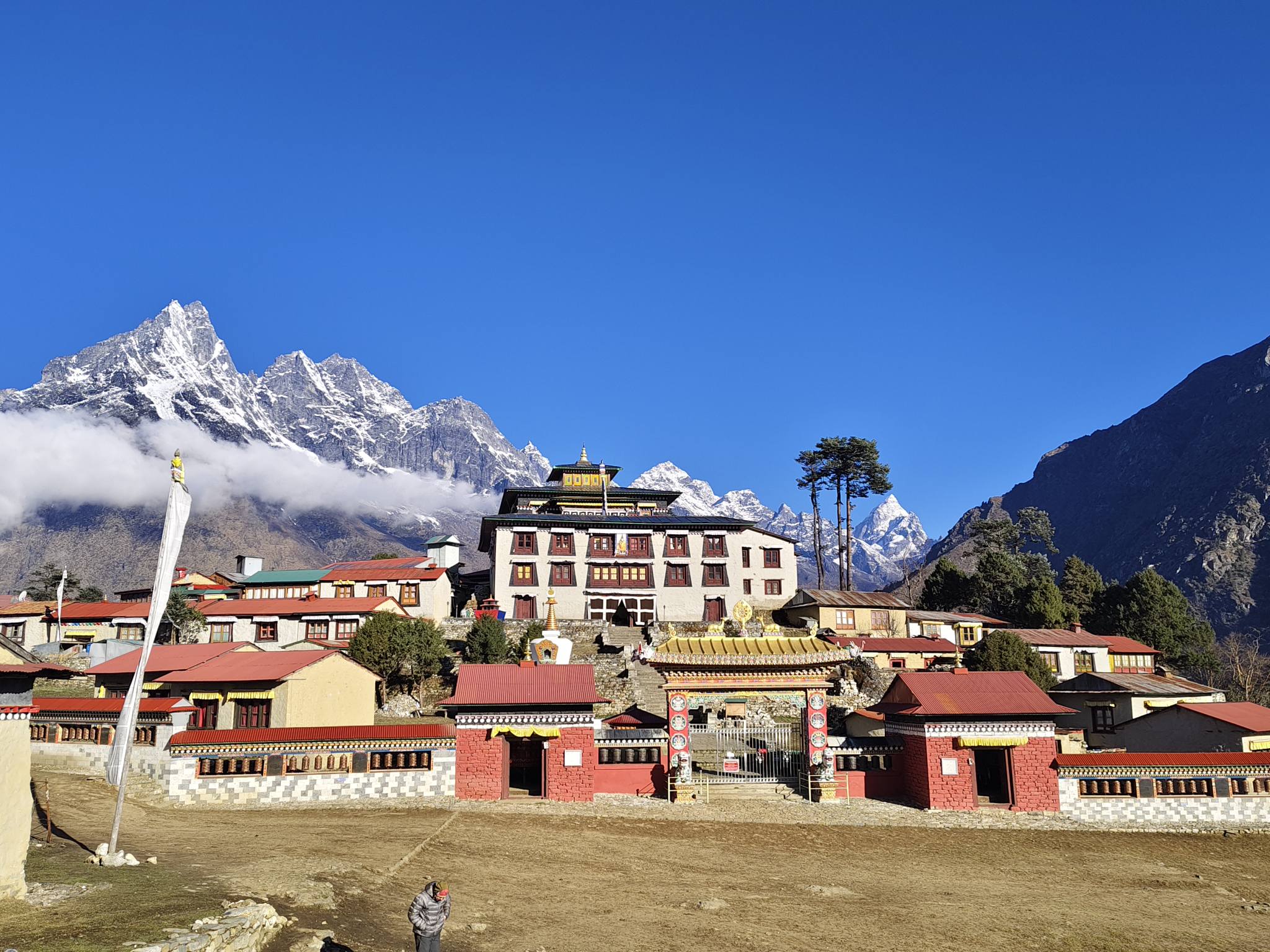
After having a delicious lunch after good Trek we will have to climb up for around a Hour and reach at a very magnificent and beautiful attraction called Tengboche. There lies one of the oldest and largest monastery in Everest Region. This location is also the last point of Everest Panorama Trek.
This Destination can be for the one who are not much well prepared or lack physical fitness for the Everest Base Camp Trek.
Overnight at Debuche
- Day 13: Debuche to Dingboche (4,360 m/14,300 feet), 5/6 hours
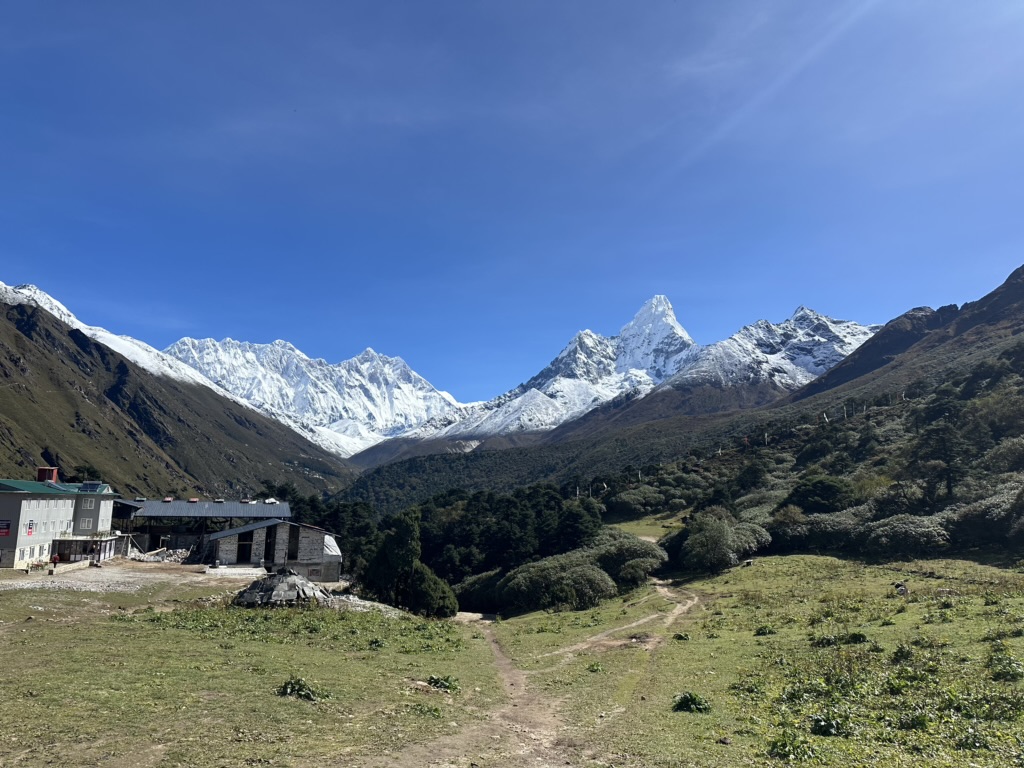
Now we have already reached the half trail of Everest Base Camp Trek. Now you are at higher altitude the surrounding environment and plants density gets thinner. You will witness less tall trees with small bushes of herbs and Shrubs. This Day our destination will be Dhingboche (4,410m). We will have gental uphill Trek. You will encounter small villages and some small monasteries. We will be trekking along the riverside enjoying the beautiful and peaceful nature.
Overnight at Dhingboche
- Day 14: Trek from Dingboche (4,410 m / 14,468 ft) to Lobuche (4,940 m / 16,207 ft) (4-5 hours)
The trek from Dingboche (4,410 m / 14,468 ft) to Lobuche (4,940 m / 16,207 ft) takes approximately 4-5 hours and offers dramatic high-altitude Himalayan scenery.
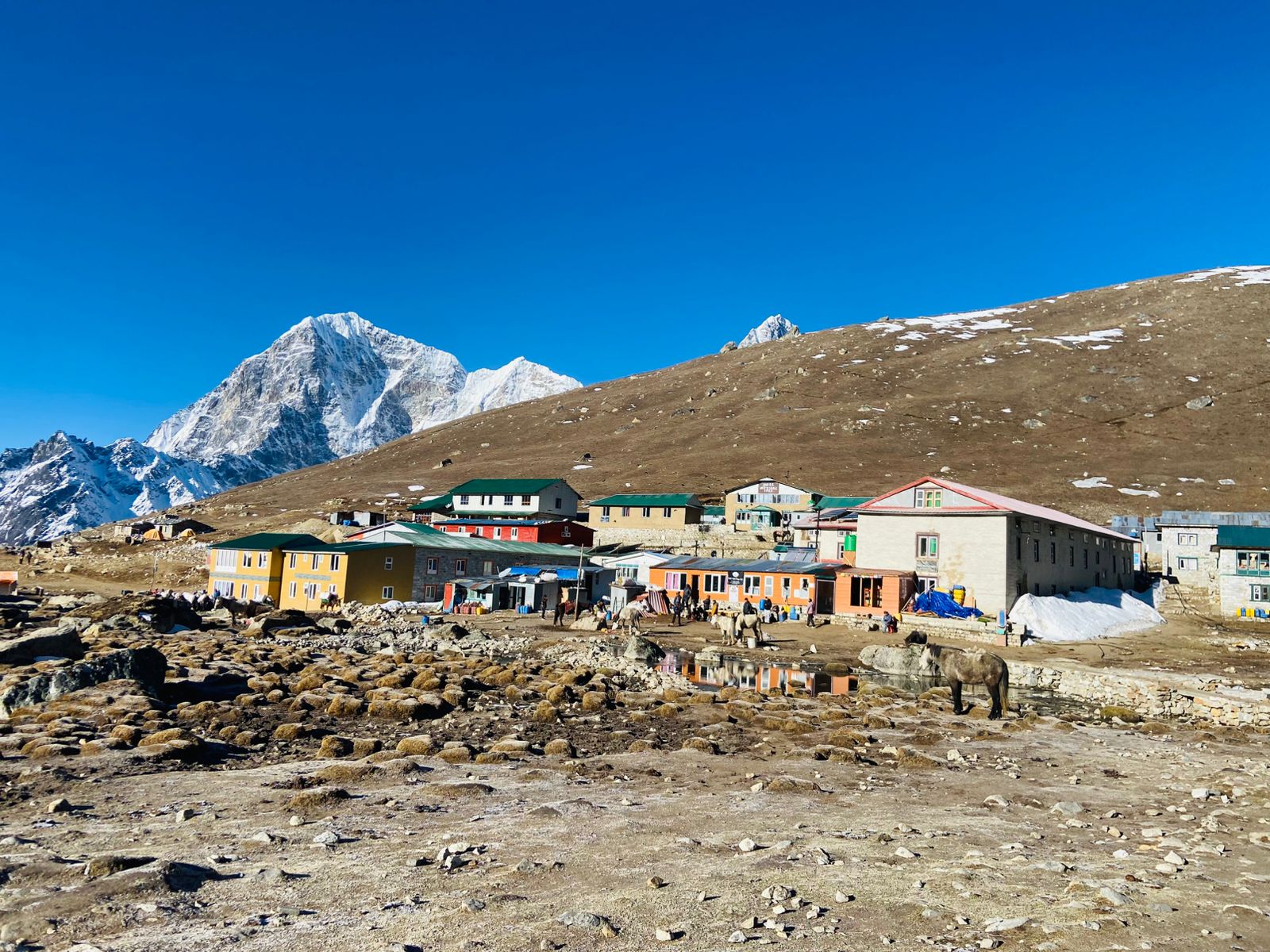
The trail gradually ascends through alpine landscapes and yak pastures before reaching Thukla Pass, where memorials dedicated to climbers and Sherpas create a powerful and emotional atmosphere. From here, the route continues along the Khumbu Glacier with breathtaking views of peaks such as Pumori, Nuptse, Lobuche Peak, and Ama Dablam.
As you approach Lobuche, the landscape becomes more rugged and glacial, giving trekkers a true sense of being deep in the heart of the Himalayas. Lobuche serves as an important overnight stop before reaching Everest Base Camp.
Overnight at Lobuche
- Day 15: Lobuche - Gorak Shep [5170 m/16,961feet] - Everest Base Camp [5364 m/17,594 feet], 7 - 8 hours
It is the highlight of the Everest Base Camp Trek. This unforgettable journey takes around 7–8 hours round trip and offers breathtaking views of glaciers, icefalls, and towering Himalayan peaks.
The trail follows the rugged moraine of the Khumbu Glacier with spectacular scenery of Nuptse, Pumori, Khumbutse, and other snow-covered mountains. After reaching Gorak Shep, trekkers continue toward Everest Base Camp, passing through dramatic glacial landscapes and rocky terrain.
Standing at Everest Base Camp is a lifetime achievement and an emotional moment for every trekker. Surrounded by the world’s highest mountains and the famous Khumbu Icefall, the experience is both inspiring and unforgettable. After spending time at Base Camp, you will return to Gorak Shep for an overnight stay.
Overnight at Gorakshep
- Day 16: Trek from Gorakshep to Kala Patthar and to Pheriche [4280 m/14,070 feet], 8 - 9 hours
Early in the morning, you will hike to Kala Patthar, the highest viewpoint of the trek, offering breathtaking sunrise views over Mt. Everest, Nuptse, Pumori, and the surrounding Himalayan peaks. The panoramic scenery from the top is truly unforgettable and considered one of the best mountain viewpoints in Nepal.
After enjoying the spectacular views, you will descend back to Gorak Shep for breakfast before continuing downhill toward Pheriche. The trail follows glacial valleys and alpine landscapes with stunning Himalayan scenery throughout the journey. Descending to a lower altitude also helps your body recover after reaching Everest Base Camp and Kala Patthar.
Overnight at Pheriche
- Day 17: Trek from Periche to Namche Bazaar (3,440 m/11,280 feet), 6-8 hours
After completing the unforgettable journey to Everest Base Camp and Kala Patthar, the trail gradually descends toward Namche Bazaar. Following the classic Everest Base Camp return route, trekkers enjoy the opportunity to experience the Himalayan landscapes from a completely different perspective. As the altitude decreases, breathing becomes easier and the warmer air brings renewed energy to the journey. Arriving back in Namche Bazaar feels welcoming after days spent in remote mountain settlements. The lively Sherpa town offers cozy lodges, bakeries, cafes, and a comfortable atmosphere where trekkers can relax, celebrate their achievement, and share memorable experiences from their Everest adventure.
Overnight at Namche Bazaar
- Day 18: Trek from Namche to Lukla 7-8 hours
The trek back from Namche Bazaar (3,440 m / 11,286 ft) to Lukla Airport (2,800 m / 9,186 ft) takes approximately 6–7 hours and marks the final walking day of the Everest Base Camp Trek.
The trail descends through beautiful pine forests, traditional Sherpa villages, and suspension bridges over the Dudh Koshi River. Along the way, trekkers can enjoy the last views of the Himalayan peaks while passing through familiar settlements such as Phakding and Monjo.
Returning to Lukla brings a strong sense of achievement and reflection after completing one of the world’s most iconic trekking journeys. The evening is usually spent celebrating the successful trek with guides, porters, and fellow trekkers before the flight back to Kathmandu.
Overnight at Lukla
- Day 19: Lukla – Kathmandu, (2,800m/9,186feet)
The return flight from Lukla Airport (2,800 m / 9,186 ft) to Kathmandu is a short yet unforgettable journey that takes approximately 25–30 minutes.
This scenic flight offers breathtaking aerial views of the Himalayas, rolling hills, deep valleys, and traditional villages of Nepal. As you leave the mountains behind, you get one last glimpse of the Everest region, making it a memorable conclusion to your trekking adventure.
Upon arrival in Kathmandu, your Everest Base Camp journey officially comes to an end, leaving you with lifelong memories of the Himalayas.
Note: During peak seasons, flights from Lukla Airport may be rerouted to Ramechhap due to air traffic management. In such cases, you will take a short flight from Lukla to Ramechhap, followed by a 4–5 hour drive back to Kathmandu. Upon arrival, you will be transferred to your hotel for a comfortable and peaceful overnight stay.
Overnight at KTM
- Day 20: Free Day in Kathmandu
A free day in Kathmandu is an important buffer day in the itinerary, mainly to accommodate possible flight delays or cancellations due to weather conditions in the Himalayas.
If flights operate on time, this day offers a wonderful opportunity to explore the cultural and historical highlights of Kathmandu Valley, including UNESCO World Heritage Sites, vibrant markets, and local neighborhoods. It is also a great time for last-minute shopping and collecting souvenirs for family and friends.
Most importantly, this relaxed day allows you to reflect on your incredible trekking journey in Nepal and fully absorb the unforgettable experiences of the Himalayas.
Overnight at KTM
- Day 21: Final Departure
On your final day in Kathmandu, a Sherpa Himalaya representative will meet you at your hotel for a warm farewell before your departure. You will be comfortably transferred to Tribhuvan International Airport in time for your flight, ensuring a smooth and hassle-free exit from Nepal.
Before saying goodbye, the team will express their gratitude for sharing this incredible Himalayan journey with you. As a token of appreciation, you will be presented with a traditional Buddhist scarf (Kha-tak), symbolizing peace, prosperity, long life, and harmony, along with a certificate marking your successful completion of EBC Trek via Traditional Jiri route. With heartfelt thanks and a warm Namaste, the team bids you farewell, hoping to welcome you again for another unforgettable adventure in Nepal
View remaining 9 DaysIncludes
- All transfer from Airport to Hotel and Hotel to Airport
- 3 nights Hotel in Kathmandu. (B&B) 3 star level Hotel
- Kathmandu to Jiri Drive by Private Jeep/ Car
- Domestic Flight ( Lukla to Kathmandu)
- Tea house, accommodation during the trek.
- All Meals ( Tea, Breakfast , Lunch and Dinner) during the trek
- Trekking Duffel Bag by company
- Sagarmatha National Park Entry Fee
- Gaurisankar National park Fee
- TIMS Card (Trekking Permit)
- Experience Trekking guide
- Assistant “Sherpa ” (For 4 Trekkers =1 Assistant Sherpa)
- Required Number of Potters (2 Trekkers:1 Potter)
- Insurance for Nepali Staff
- All Government and Local Taxes
- Farewell Dinner in Kathmandu Last Night
Excludes
- Nepal Visa fee (please bring two passport photographs and cash on USD Denomination)
- Personal, Travel and rescue insurance
- International airfare to and from Nepal
- Excess baggage charges for Air travel
- Extra night stay in Kathmandu because of early arrival, late departure, early return from the trip(due to any reason) than the scheduled itinerary
- Breakfast, lunch and evening meals in Kathmandu if you return early from the trip
- Extended activities and destinations
- All cold drinks during the trek (mineral water, cola, beer and Bar-bills)
- Hot Shower During the Trek
- Battery Charge ( All electronic devices) WI-FI (internet)
- Tips for guides and porters (Nepali)Tips for Guide and Staff
- Emergency evacuation by Helicopter (in case needed)
The Route
Gears & Equipment
Download Gear ListHead
- Sun Cap
- Fleece Hat/Warm Hat (1-2 Pcs)
- Neck Gaiter (2 Pcs)
- Head Lamp with extra batteries
Upper Body
- Thermal Top Base Layer (2 Pcs)
- Fleece Jacket (1 Pcs)
- Gore Tex Jacket (1 Pcs)
- Down Jacket (1 Pcs)
- Cotton T-Shirt (3 Pcs)
- Wind Breaker /windproof jacket (Optional)
Lower Body
- Thermal Bottom Base Layer (2 Pcs)
- Fleece Trouser (1pcs)
- Gore Tex Pant (1 pcs)
- Mid Weight Pants (1Pcs)
- Light Weight Quick Dry Trekking Pants (2-3 Pairs)
- Underwear(4-5 pcs)
- Gaiters for trekking boots
Hands
- Thin Fleece Gloves (2 Pairs)
- Wind Stopper / Screen Tap Gloves
- Normal down gloves
Sleeping Stuffs
- Sleeping Bag -20°C to -30°C
- Liners for Sleeping Bag
Bag Packs
- Rucksacks 35L – 45L (Day Bag)
Sun Stuffs
- Banana Boat/ Nivea Sun Cream (-50 Spf)
- Lip Guard 30-50 (Spf)
- Sun Glasses (Uv Protection)
Foot Wear
- Normal Socks (5-6 Pairs)
- Trekking Shoes/Hiking Boots (Gore Tex)
- Slipper (1 Pair)
- Camp Shoes (1 pair)
- Trekking Crampons (Spikes)
Eating & Drinking
- 1 Ltr. Water Bottle
- 1/ 1.5 Ltr. Thermos (Optional)
Toiletries
- Toilet Paper / Wet Tissue
- Toothbrush &Toothpaste
- Soap/ Shampoo
- Towel
Miscellaneous
- Nail Cutter
- Umbrella / Rain Coat
- Hot Water Bag(Optional)
- Power bank (Back up battery)
- Trekking poles-1 pair
Additional Information
The Classic Everest Trek via Jiri is a longer and more traditional approach to the Everest region. Instead of flying directly to Lukla, the journey begins with a scenic drive from Kathmandu to Jiri. From Jiri, the trail gradually enters the Solukhumbu region and eventually joins the popular Everest Base Camp route.
The trek combines mountain scenery, Sherpa culture, historic trekking trails, high-altitude landscapes and famous Everest viewpoints. Along the way, trekkers pass through villages such as Bhandar, Sete, Junbesi, Nunthala and Namche Bazaar before continuing toward Tengboche, Dingboche, Lobuche and Everest Base Camp.
The route also reaches Kala Patthar at 5,545 meters, one of the most popular viewpoints for panoramic views of Mount Everest and surrounding Himalayan peaks.
Classic Everest Trek via Jiri at a Glance
Trek Feature Information Trek name Classic Everest Trek via Jiri Duration 21 days Starting point Jiri Main destination Everest Base Camp Highest point Kala Patthar – 5,545 m Everest Base Camp 5,364 m Trek region Everest / Khumbu Trek difficulty Challenging Accommodation Tea houses and hotels Transportation Private road transport and domestic flight Main highlights Jiri, Lamjura Pass, Junbesi, Namche, Tengboche, Everest Base Camp and Kala Patthar Recommended seasons Spring and autumn Trek style Guided tea-house trekking What Makes the Jiri Everest Route Different?
The Jiri route provides a more gradual and traditional approach to the Everest region. Trekkers spend several days walking through the lower Solukhumbu before reaching the main Khumbu trail.
The route is particularly interesting for travelers who want more than a short trip to Everest Base Camp. It offers opportunities to experience rural Nepal, traditional villages, forests, mountain passes and local communities along the way.
Compared with the Lukla route, the Jiri approach requires more trekking days. The additional distance makes it suitable for travelers who have enough time and want a deeper trekking experience.
Jiri to Everest Base Camp Route
The trek begins with a drive from Kathmandu to Jiri. From there, the trail follows a historic trekking route through the lower Everest region.
The route generally progresses through:
Kathmandu → Jiri → Bhandar → Sete → Junbesi → Nunthala → Bupsa → Chaurikharka → Namche Bazaar → Tengboche → Dingboche → Lobuche → Gorak Shep → Everest Base Camp → Kala Patthar → Pheriche → Namche Bazaar → Lukla → Kathmandu
The lower section of the trek offers forests, farmland, rivers and traditional settlements. As the trail gains elevation, the landscape changes to alpine terrain, glacial valleys and dramatic Himalayan scenery.
Why Start the Everest Trek from Jiri?
Starting from Jiri allows trekkers to experience the historic approach to Everest rather than beginning with a flight into Lukla.
The Jiri route offers:
- A longer trekking experience
- Gradual progression toward higher elevations
- Traditional villages in the lower Solukhumbu
- Forested trails and mountain landscapes
- Sherpa cultural experiences
- Lamjura Pass
- Junbesi Valley
- Namche Bazaar
- Tengboche Monastery
- Everest Base Camp
- Kala Patthar
For travelers with sufficient time, the route provides a broader experience of the Everest region.
How Difficult Is the Classic Everest Trek via Jiri?
The Classic Everest Trek via Jiri is a challenging high-altitude trekking journey. Physical preparation is important because the itinerary includes long walking days, repeated ascents and descents, steep sections and significant altitude gain.
The highest point is Kala Patthar at 5,545 meters. Everest Base Camp is located at approximately 5,364 meters.
The main factors that make the trek demanding include:
- Long trekking duration
- Several hours of walking on most trekking days
- Continuous elevation gain
- Steep uphill and downhill sections
- High-altitude terrain
- Cold conditions at higher elevations
- Reduced oxygen availability
- Early-morning hike to Kala Patthar
Regular walking, hiking, stair climbing and cardiovascular exercise can help build endurance before the trek.
Altitude and Acclimatization
Altitude is one of the most important considerations when planning an Everest trek. The Jiri route begins at a much lower elevation and allows trekkers to spend more time gaining altitude before reaching the high Khumbu valleys.
Important elevations include:
- Jiri – approximately 1,905 m
- Junbesi – approximately 2,580 m
- Namche Bazaar – approximately 3,440 m
- Dingboche – approximately 4,360 m
- Lobuche – approximately 4,940 m
- Gorak Shep – approximately 5,170 m
- Everest Base Camp – approximately 5,364 m
- Kala Patthar – approximately 5,545 m
The itinerary includes an acclimatization day in Namche Bazaar. Trekkers should maintain a steady pace, stay hydrated and communicate with their guide if they experience symptoms associated with altitude.
A gradual itinerary can support acclimatization, but it cannot completely eliminate the risk of altitude sickness.
Jiri Route vs Lukla Route
Both routes can lead to Everest Base Camp, but they provide different trekking experiences.
The Jiri route is longer and includes the historic lower approach to the Everest region. It is suitable for travelers who want additional trekking days and more exposure to rural landscapes and traditional settlements.
The Lukla route provides faster access to the Khumbu region and is generally chosen by travelers with less time.
Your choice depends on your available vacation time, preferred trekking style, physical preparation and interest in the traditional Everest approach.
Who Is the Jiri to Everest Base Camp Trek Suitable For?
The trek is suitable for travelers who:
- Have enough time for a longer Himalayan journey
- Enjoy multi-day trekking
- Want a traditional Everest trekking experience
- Are interested in local culture and mountain communities
- Want to experience the lower Solukhumbu region
- Have good physical endurance
- Want to combine cultural experiences with high-altitude trekking
Previous high-altitude trekking experience can be helpful, although preparation and fitness are more important than simply having completed another trek.
Best Time for the Classic Everest Trek via Jiri
Spring and autumn are generally the most popular seasons for trekking in the Everest region.
Spring: March to May
Spring brings warmer conditions at lower elevations and good opportunities for mountain views. Rhododendron forests can also add color to the lower sections of the route.
Autumn: September to November
Autumn generally provides favorable trekking conditions and clear mountain views. It is one of the busiest trekking periods in Nepal.
Winter: December to February
Higher elevations can become very cold, and snow may affect some sections of the trail. Trekkers need appropriate cold-weather equipment.
Monsoon: June to August
The lower Jiri section can receive substantial rainfall. Trails may become muddy and slippery, while clouds can reduce mountain visibility.
Accommodation During the Trek
Tea houses and mountain lodges provide accommodation along the trekking route. Rooms are generally simple and designed for trekkers.
Most tea houses provide basic beds, blankets or bedding, shared facilities and communal dining areas. Facilities become more basic as the altitude increases.
Travelers should expect simple mountain accommodation rather than hotel-style facilities.
Food During the Jiri Everest Trek
Meals are available at tea houses and lodges along the route. Common trekking meals include dal bhat, noodles, rice, pasta, soup, potatoes, vegetables, eggs, bread and other simple dishes.
Dal bhat is particularly popular because it provides a filling combination of rice, lentils and vegetables.
At higher elevations, food choices may become more limited because supplies need to be transported along the mountain trails.
What Should You Pack?
A suitable packing list should include clothing and equipment for both lower-elevation trekking and cold high-altitude conditions.
Essential items generally include:
- Trekking boots
- Warm layers
- Waterproof jacket
- Thermal clothing
- Trekking trousers
- Warm hat and gloves
- Sunglasses
- Sunscreen
- Water bottles
- Headlamp
- Sleeping bag
- Trekking poles
- Personal first-aid supplies
- Basic toiletries
- Backpack or duffel bag
- Personal documents and permits
Your exact packing requirements can vary depending on the season and itinerary.
What Permits Are Required?
Trekkers entering the Everest region need the applicable trekking permits and local entry documentation. Permit requirements can change, so travelers should confirm the current requirements before departure.
A professional trekking operator can assist with arranging the required permits and explaining the documentation needed for the journey.
Why Trek the Classic Everest Route with a Local Operator?
A local trekking company can assist with practical arrangements before and during the trek. This can include airport transfers, accommodation, transportation, permits, guides, porters, route planning and coordination during the trek.
For a long high-altitude journey such as the Jiri Everest route, local logistical support can also help travelers respond to changes caused by weather, trail conditions, transportation schedules or individual trekking needs.
Frequently Asked Questions
Is the Jiri to Everest Base Camp Trek longer than the Lukla route?
Yes. Starting from Jiri adds several trekking days compared with starting directly from Lukla.
What is the highest point of the Jiri Everest Trek?
The highest point is Kala Patthar at approximately 5,545 meters.
Does the Jiri route reach Everest Base Camp?
Yes. The itinerary includes a trek to Everest Base Camp at approximately 5,364 meters.
How many days does the Classic Everest Trek via Jiri take?
The listed itinerary is 21 days, including transportation, trekking, acclimatization, the Everest Base Camp section, return to Lukla and the journey back to Kathmandu.
Is the Jiri Everest Trek difficult?
It is a challenging high-altitude trek because of its long duration, elevation gain, demanding terrain and high maximum altitude.
Do I need previous trekking experience?
Previous trekking experience is helpful but not always essential. Good physical fitness, preparation and an appropriate pace are important.
What is the best season for the Jiri Everest Trek?
Spring and autumn are generally the most popular seasons because of favorable trekking conditions and mountain visibility.
Where do trekkers stay?
Trekkers normally stay in tea houses and mountain lodges along the route, with hotel accommodation in Kathmandu.
Is altitude sickness possible on the Jiri route?
Yes. Altitude sickness can occur despite gradual acclimatization. Trekkers should monitor their health and immediately inform their guide about concerning symptoms.
Can the Jiri Everest Trek be customized?
The itinerary can often be adjusted according to trekking pace, available time, acclimatization requirements and additional destinations, subject to logistics and local conditions.
Plan Your Classic Everest Trek via Jiri
The Classic Everest Trek via Jiri combines the historic approach to Everest with traditional villages, Sherpa culture and the iconic landscapes of the Khumbu region. The longer route allows travelers to experience more of Nepal before reaching Everest Base Camp and Kala Patthar.
Before booking, consider the trek duration, altitude, physical demands, preferred season and preparation requirements. Travelers can also discuss itinerary customization, accommodation preferences, transportation and trekking support with Sherpa Himalaya.
Share Your Experience
Your insights help us maintain our exceptional standards and guide fellow travelers.
Send Quick Email
Error: Contact form not found.

Questions? Talk to an expert
Schedule a callYou might also like
 13 Days5,416m
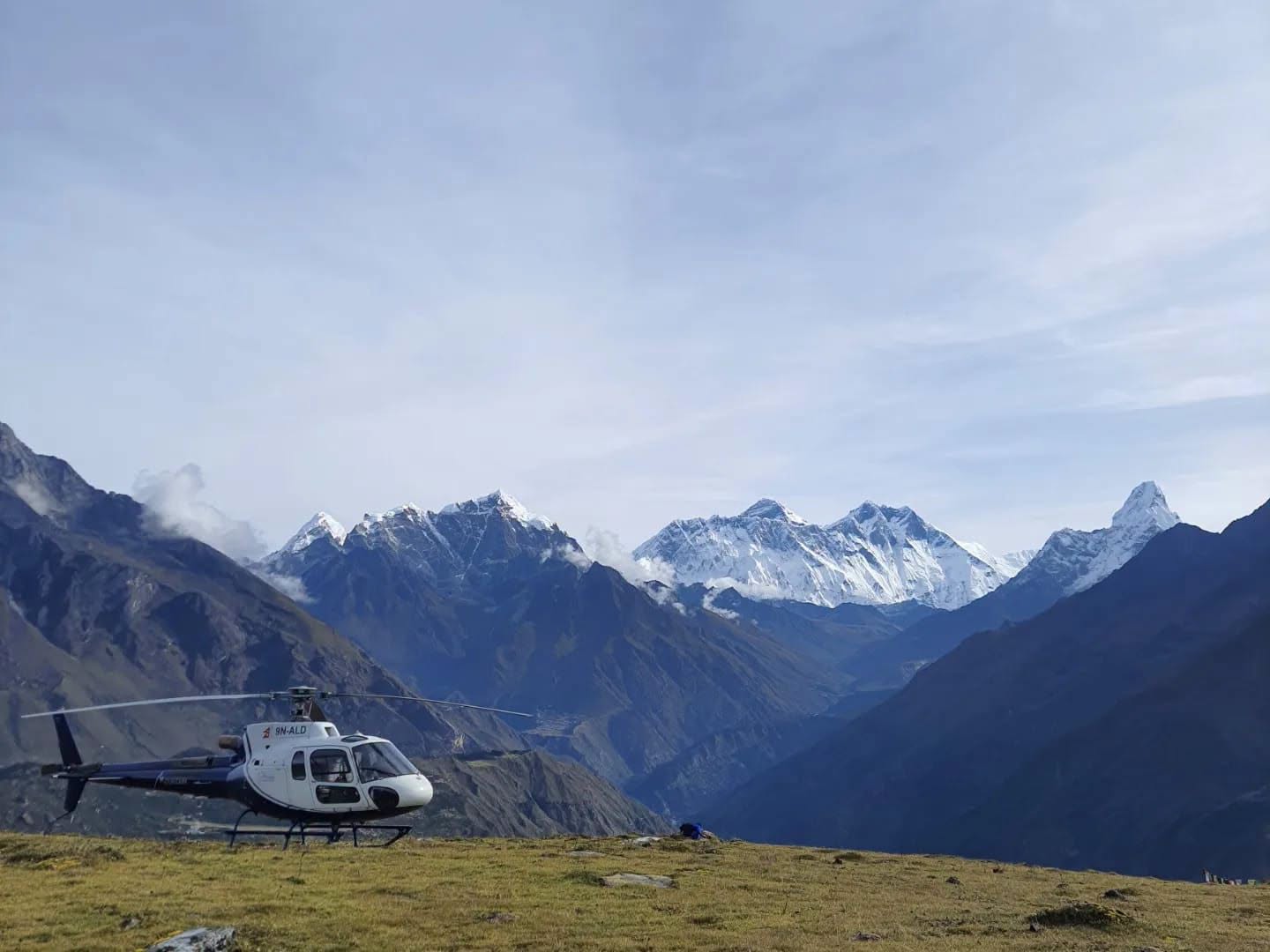
Everest Base Camp Luxury Trek- 13 Days
Everest Base Camp Luxury Trek is the perfect blend of adventure, comfort, and exclusivity, allowing you...
 13 Days18,700 ft / 5,732
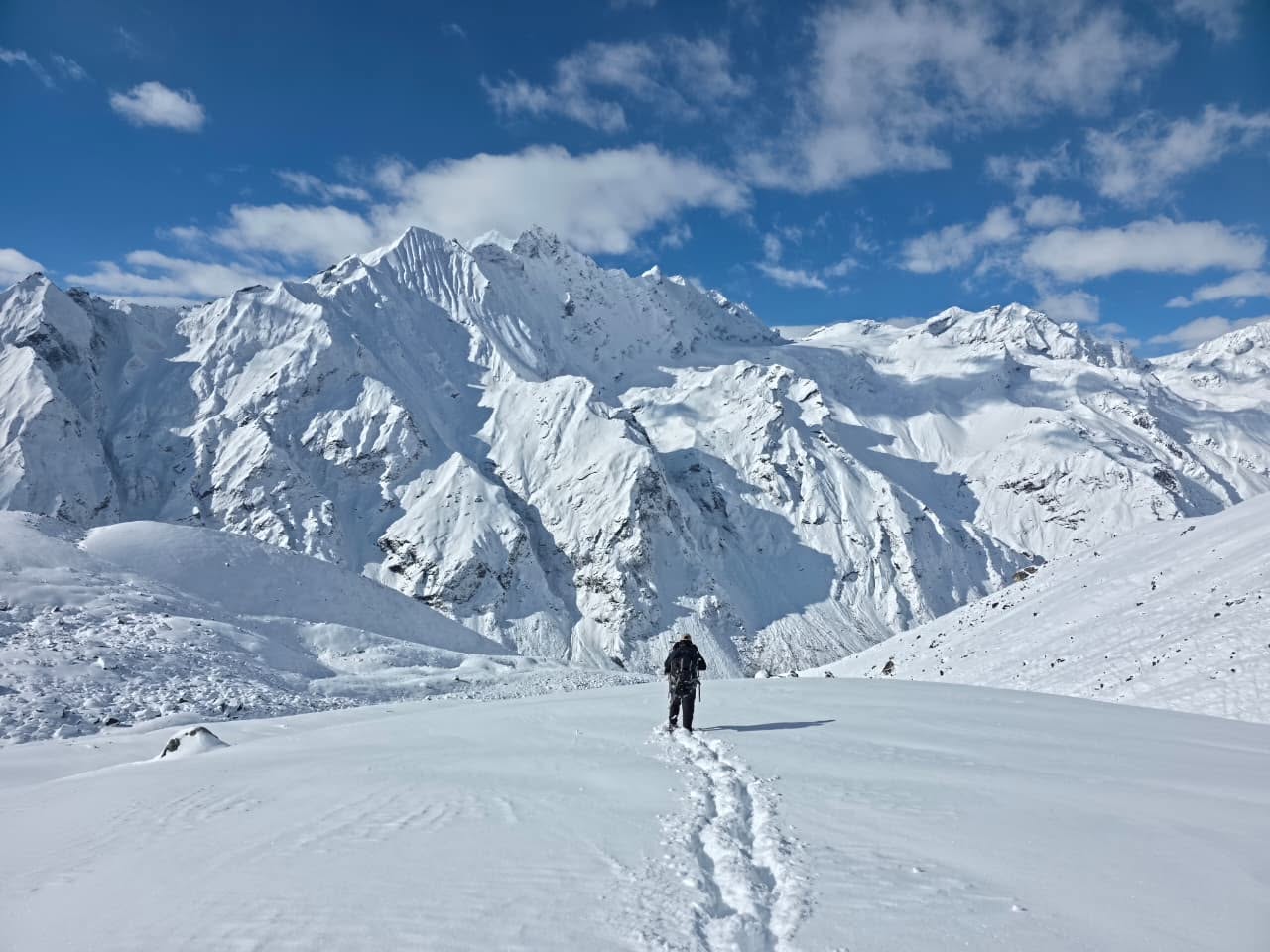
Yala Peak Climbing(5,732m/18,806ft)-14 Days
Yala Peak Climbing (5,732m/18,806ft) is one of the best peak climbing adventures in Nepal for trekkers...
Ready to Explore the Himalayas?
Join us for professionally guided trekking, mountaineering expeditions, and peak climbing experiences across Nepal’s most iconic landscapes.
Join our newsletter & stay updated.
Error: Contact form not found.
We're associated with




- Day 02: Drive from Kathmandu to Jiri (1,905 m/6,250 ft)